Introduction
Communalism, is referred in the western world as a "theory or system of government in which virtually autonomous local communities are loosely in federation". Communalism is a political philosophy, which proposes that market and money be abolished and that land and enterprises to be placed in the custody of community.
Development of communalism as political philosophy, has roots in the ethnic and cultural diversity of Africa. It is characterized as, People from different ethnic groups or community, who do not interact much or at all and this has somewhere acted as hindrance in the economic growth and prosperity of Africa.
Communalism in South Asia is used to denote the differences between the various religious groups and difference among the people of different community. And generally it is used to catalyse communal violence between those groups.
Communalism is not unique only to South Asia, but is also found in Africa, America, Europe, Australia, and Asia. But, it is significant socio-economic and political issue in Bangladesh, India, Pakistan, Myanmar, Sri Lanka, Nepal, etc.
What is Communalism?
It is basically an ideology which consists of three elements:-
A belief that people who follow the same religion have common secular interests i.e. they have same political, economic and social interests. So, here socio- political communalities arises.
A notion that, in a multi-religious society like India, these common secular interests of one religion are dissimilar and divergent from the interests of the follower of another religion.
- The interests of the follower of the different religion or of different 'communities' are seen to be completely incompatible, antagonist and hostile.
Communalism is political trade in religion. It is an ideology on which communal politics is based. And communal violence are conjectural consequences of communal ideology.
Evolution of communalism in Indian society
If we discuss about Indian society, we will find that, ancient India was united and no such communal feelings were there. People lived peacefully together, there was acceptance for each other's culture and tradition. For example, Ashoka followed religious tolerance and focussed mainly on Dhamma.
In Medieval period, we have examples such as- Akbar, who was epitome of secular practises and believed in propagating such values by abolishing Jajhiya tax and starting of Din-I- ilahi and Ibadat Khana. Same acceptance for different cultures and tradition was practised in several kingdoms throughout India, because of which there was peace and harmony, barring few sectarian rulers like Aurangzeb, who was least tolerant for other religious practises. But, such motives were guided purely for their personal greed of power and wealth.
Such rulers and actions by them like- imposing taxes on religious practises of other community, destructing temples, forced conversions, killing of Sikh guru, etc. were instrumental in deepening and establishing the feeling of communal differences in India. But, these incidents were not common as, huge majority of Indians were rural and were aloof from such influences and so people coexisted peacefully. Though, they were very rigid in practising their own rituals and practise, but it never became barrier in the peaceful coexistence. Overall, the Hindus and Muslims in those days, had common economic and political interests.
Communalism in India is result of the emergence of modern politics, which has its roots inpartition of Bengal in 1905 and feature of separate electorate under Government of India Act, 1909.Later, British government also appeased various communities throughCommunal award in 1932, which faced strong resistance from Gandhi ji and others. All these acts were done by the British government to appease Muslims and other communities, for their own political needs. This feeling of communalism has deepened since then, fragmenting the Indian society and being a cause of unrest.
(by Communal award colonial government mandated that consensus over any issue among different communities (i.e. Hindu, Muslims, Sikhs and others) is precondition for any further political development)
Communal consciousness arose as a result of the transformation of Indian society under the impact of colonialism and the need to struggle against it.
Stages in Indian Communalism and how it spread
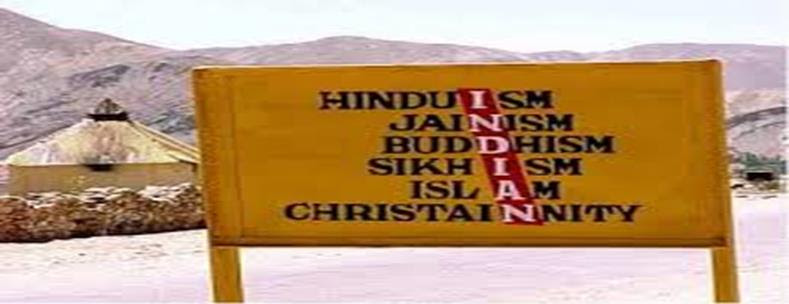
India is a land of diversity. And it is known for lingual, ethnic, cultural and racial diversity. As, we have discussed above, communalism in India is a modern phenomenon, which has become threat to India's Unity in Diversity. We will see the various stages:-
First stage was rise of nationalist Hindu, Muslim, Sikh, etc. with only first element of communalism as discussed above. Roots of this were led in later part of 19th century with Hindu revivalist movement like Shuddhi movement of Arya Samaj and Cow protection riots of 1892.
On the other hand movements like Faraizi movement started Haji Shariatullah in Bengal to bring the Bengali Muslims back on the true path of Islam, was one of the religious reform movement which had bearing on communalism in 19th century. Later people like Syed Ahmed Khan, who despite of having scientific and rational approach, projected Indian Muslims as a separate community (qaum) having interest different from others.
Second stage was of Liberal communalism, it believed in communal politics but liberal in democratic, humanist and nationalist values. It was basically before 1937. For example organisations like Hindu Mahasabha, Muslim League and personalities like M.A. Jinnah, M M Malviya, Lala Lajpat Rai after 1920s
- Third was the stage of Extreme Communalism, this had a fascist syndrome. It demanded for separate nation, based on fear and hatred. There was tendency to use violence of language, deed and behaviour. For example Muslim League and Hindu Mahasabha after 1937.
It spread as a by-product of colonialism, economic stagnations and absence of modern institutions of education and health. These factors caused competition, people started using nepotism (patronage bestowed or favouritism shown on the basis of family relationship, as in business and politics), paying bribes to get job, etc. Short term benefits from communalism started giving validity to communal politics.
Later on, spread of education to peasant and small landlords gave rise to new middle class, as agriculture was becoming stagnant. So, these people started demanding communal representation and this way, social base for communalism widened. Middle class oscillated between anti-imperialism and communalism. Communalism, started rooting deeply, as it was an expression of aspiration and interest of middle class for less opportunity.
Further, from very beginning upper caste Hindus dominated colonial services as they adapted early to colonial structure. Because of Mughal rule and 1857 revolt, colonial government was suspicious towards Muslims and they patronised Hindus. This resulted in resentment in Muslims in late 19th century and they then formed a pressure group under Sir Sayed Ahmed Kahn to bargain as a separate community. In contrast Congress standpoint was always focused on 'rights and freedom of individual' not on a particular community
In several part religious distinction coincided with social and class distinction, causing communal distortion. Communal outlook was given, not by participants but by the officials, politician and journalists. In fact agrarian conflicts, did not assume communal colour until 20th century. For example- Pabna agrarian movement.
Communalism represented a struggle between two upper classes / strata for power, privileges and economic gain. For Example- In western Punjab at that time, Muslim landlord opposed Hindu moneylenders. In eastern Bengal, Muslim jotedars opposed Hindu zamindars. Later on, communalism developed as weapon of economically and politically reactionary social classes and political forces.
Divide and Rule
Communalism was a channel for providing service to colonialism and the jagirdari class (land officials). British authorities supported communal feelings and divided Indian society for their authoritative ruling. As we have already discussed above about separate electorate, like that official patronage and favour having communal biasness was very common. Communal press & persons and agitations were shown extraordinary tolerance. Communal demands were accepted, thus politically strengthening communal organizations. British started accepting communal organisations and leaders as the real spokesperson of communities and adopted a policy of non-action against communalism. In fact, for the same reasons even the communal riots were not crushed. Separate electorate started in 1909 to communal award in 1932 fulfilled the wishes of British authorities of ruling India by dividing the societies on communal lines.
In parallel there was introduction of strong Hindu religious element in nationalist thoughts and propagandas. For example Bal GangadharTilak popularised Ganesh pooja and Shivaji Mahaotsav and taking dip in Ganga,etc. The programmes related to "Ganesh Pooja" and "Shivaji Mahotsav" was not initiated to support the interests of Hindus. However, both "Ganesh" and "Shivaji" were associated with the emotions of a number of Hindus. This was to be used by Leaders as tool to politically awaken Indians. But, Indian history in schools and colleges were given Communal and unscientific colour. This kept Muslims largely away from Congress till 1919. In early decades only 8-9% of members of Congress were Muslims.
Gradually religiosity became major contributory factor and it started intruding the non-religious and non-spiritual areas of life and also beyond the individual's private life.
Though, India is a secular country but due to communal feelings the secularization is getting affected. Secularization is narrowing down the sphere of religion to the private life of the individual. So, communalism is basically becoming a belief system through which a society, economy, and polity are viewed & expanded and around which effort is being made to organise politics.
With these unprecedented changes, the best atmosphere of communal harmony should have been created in India and according to the expectation of Mahatma Gandhi this country should have become an example in this direction. But this did not happen.
Why communalism still persists and increasing in modern India?
Constitution of India, gives certain fundamental rights to the citizens (i.e. individuals). But in case of minorities, the whole community has been given fundamental rights under Article 28,29 and 30, according to which they are free to manage their educational institutions and have right to conserve their own culture. But these rights are being used, above the individual rights by the personal law boards guided by their own community laws. As it was seen in Shah Bano case.
There is also resentment against such personal laws and clamour is increasing forUniform civil code, which is also mentioned under Article 44 in Directive principle for states of Indian constitution. This will help in narrowing the religious cleavages.
In absence of Uniform civil code, there is still perception that all communities have divergent and contradictory interests. Consequently, community based pressure groups bargain for their own community. At political level these communities compete for power and resources. This competition, in turn, escalates to major conflicts. Politicians try to turn these communities into vote banks and different communities become watertight compartments.
Since Independence, India has been pursuing the ideal of nation-building based on secularism. Even after 68 years of independence, India is still burning under the fire of communalism. Though, there are various reasons responsible for this. But few of them have been discussed here, understanding the reasons which play role in continuation of communalism are:-first one is religious, and the second one is political. Third one is socio-economic and the fourth one is international.
In the first, i.e. religious, its fundamentalism should be considered responsible for communalism. After all, 'Our belief alone is true' and 'rest is untrue or incomplete', we find this kind of mentality of fundamentalists. As per this mentality, when the followers of any religious community, sect or sub-sect indulge in their activities, they certainly come in conflict with others. Reason is quite evident. They do not have tolerance, which is absolutely necessary for a country like India–a land of different religious communities. They become the cause of confrontation, malice and struggle.
Politicians also have played a villainous role in creating serious communal situations in India. There was politics at the root of painful division of India in 1947 in the name of a particular religious community. But even after paying a heavy price in the form of partition, in many riots provoked thereafter, we can find the involvement directly or indirectly, of political parties or their supporters. Along with this for the sake of vote bank, the policy of appeasement, selection of candidates on the basis of community, sect, sub-sect and caste, and flaring up religious sentiments at the time of elections, led to the rise of communalism. These practices are still continued and the country is bearing heavy loss because of it. We can witness many adverse results of these practices.
Socio economic conditions of India, though after independence has improved and even the economic reforms after 1991 has been instrumental in improving such conditions, but still there are many challenges in front of Indian society, which are becoming threat for its diversity. Population, Poverty, illiteracy and unemployment create a lot of compulsions, especially before younger generation. That is why, many from younger generation, because of lack of right thinking, remain unemployed and in a state of poverty, get involved in the evil like communalism. The efforts being made for uprooting poverty, illiteracy and unemployment are not as fruitful as they should be.
External elements (including non-state actors) also have a role in worsening the problem of communalism, and making it serious. We cannot mention the name of any particular country in this regard but scholars and those who think on this problem from time to time have highlighted this fact.
The main reasons for involvement of external elements or their role in riots are as follows:
To create an atmosphere of instability, so that it becomes socially weak;
To hope for gaining sympathy from minorities;
To try to weaken the economic structure of a foreign country; and
With the aim to conceal their own incompetence.
Infamous communal violence in India

Partition of India,1947
After partition, millions of population were forced to move from both sides of the border. Hindus in Pakistan and Muslims in India were killed in masses, women were raped, and many children lost their parents. There was hatred everywhere, violence didn't see anything except bloodshed. Later, it turned in the problem of refugees and their rehabilitation became one of the biggest challenge for independent India.
Anti-Sikh riots, 1984
This is one of the bloodshed in India, where Sikhs in large number were massacred by anti- Sikh mob. This massacre took place in response to the assassination of Prime Minister Indira Gandhi by his own Sikh body Guard in response to her actions authorising the military operation.
Ethnic cleansing of Kashmiri Hindu Pundits in 1989
Kashmir is known as the heaven of India and was known for its Kashmiryat, i.e. the reflection of love, peace and harmony through brotherhood and unity of Hindu, Muslims and other communities living together. But, the brotherhood saw a serious blow due to Extremist Islamic terrorism in the Kashmir valley, which led to mass killing and large scale exodus of Kashmiri Pundits from the valley to the various regions and corners of the India, giving them the status of refugee in their own country. Since then, the valley is under the grip of communal violence and the ongoing unrest has become a problem for the development of the people.
Babri masjid demolition in Ayodhya, 1992
According to Hindu mythology, Ayodhaya is birth place of Lord Rama and therefore it is sacred place for Hindu religion. But in medieval period Mughal general Mir Baqi, built a mosque, named after Mughal ruler Babur. There were disputes since then and riots also took place. But in 1990, due to some political mobilisation, there was atmosphere of protest by Hindu religious groups and in large scale "kar sevak" visited Ayodhya from all parts of India, in support of demolishing Babri masjid and building Ram temple there. These movements caused huge amount of bloodshed and since then it is a disputed matter.
After this, violence was followed by the Godhra incident in 2002, when "kar sevak" returning from Ayodhya in a Sabarmati Express were killed by fire in the coaches of train. This act was followed by the extended communal violence in Gujarat. That violence is like black spot in the history of the Gujarat and nation too, as people were killed without any mercy. Hindu and Muslim community became antagonist to each other. Till now people are fighting for justice in Supreme Court, with a ray hope from the Indian Judiciary.
Assam Communal violence,2012
North eastern states are known for its distinguished tribal population & ethnic diversity and large scale Bangladeshi immigration has changed the demography of North eastern states, which often becomes reason for clashes. In 2012, there were ethnic clashes between Bodos (Tribal, Christian & Hindu faith) and Muslims. Ethnic tensions between Bodos and Bengali-speaking Muslims escalated into a riot in Kokrajhar in July 2012, when unidentified miscreants killed four Bodo youths at Joypur.
Muzaffarnagar violence, 2013
The cause of this ethnic clash between Jat and Muslim community is very much disputed and has many versions. According to few, it was started after some suspicious post on Social media platform Facebook. According to some, it was escalated after the eve teasing case in Shamli. Let the reasons be unknown, but what matters is, the nature and scale of loss to the country with respect to human resource and peace.
In all these and hundreds of other riots, one thing is common that huge majority of victims have nothing to do with communal hatred. In short, preparators of violence and victims of violence are different persons.
Similar to above mentioned list, there are many more, which has impact on the masses and killed people on large scale. Bombay bomb incident, 1993, Attack on Akshardham in 2002 by Lashkar-e-Toiba & Varanasi Bomb attack, 2006 are few of them, having Anti-Hindu outlook.
Lot of movies have been pictured on the above mentioned communal violence, which can give us understanding about the damages and harm, done by these violence- "Bombay" & "Black Friday" based on 1992 attacks. "Train to Pakistan" based on the novel of Khuswant singh about partition of India, 1947. "Gandhi" is portrayal of Direct Action Day and partition of India. "Hawayein" based of 1984 Sikh riots and "Machis" about Punjab terrorism.
These are the few ones to name and there are many more, which may sensitise us about such issues, so that in future it can be avoided.
Consequences of communalism
The above graph gives us idea about the decadal and regional pattern of riots and people died.
Consequences of communalism is well known to all of us. With killings in mass, the real sufferers are the poor, they lose their house, their near and dear ones, their lives, their livelihood, etc. It violates the human rights from all direction. Sometimes children will lose their parents and will become orphan for life time and nobody will be there to look after them.
Ghettoization and refugee problem is the other dimension of communalism induced violence, whether its inter country or intra country. Sudden increase in violence against any particular community causes mass exodus and stampede which in turn kills many number of people. For example, this was seen in the case of Bangalore in 2012, with respect to people from North eastern states, which was stimulated by a rumour.
Apart from having effect on the society, it is also a threat to Indian constitutional values, which promotes Secularism and religious tolerance. In that case, citizens don't fulfil their fundamental duties towards the nation. It becomes a threat for the unity and integrity of the nation as a whole. It promotes only the feeling of hatred in all directions, dividing the society on communal lines.
Other than these, minorities are viewed with suspicion by all, including state authorities like police, para military forces, army, intelligence agencies, etc. There have been many instances when people from such community have been harassed and detained and finally have been released by court orders guilt free. For this, there is no provision of compensation of such victims, about their livelihood incomes forgone, against social stigmas and emotional trauma of the families.
Such things are set back for the society and becomes barrier for its development. This is also one of the reason which is keeping India still under the status of "developing nation" because, such activities occurring frequently do harm the human resource and economy of the country. And then again it takes years for the people and the affected regions to come out the traumas of such violence, having deep impact on minds of those who have faced it. Whole life, they feel emotionally broken and insecure. How can we imagine in such conditions, for timely harvest of demographic dividend?
What state has done?
National human rights commission (NHRC) in India fights for the causes of rights of the victims, but its recommendations are advisory in nature, which doesn't gives significant outcome.
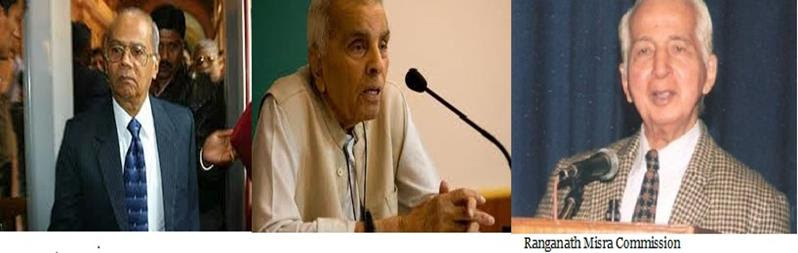
From time to time, respective governments have constituted various committees, to give recommendations to solve the issue of communal violence. Prominent among them are SACHAR COMMITTEE, NANAVATI COMMITTEE and RANGANATH MISHRA COMMISSION.
The Nanavati-Mehta commission, set up by Gujarat government in 2002 to enquire about Gujarat violence.
Sachar committee, appointed in 2005, recommended to set up Equal opportunity commission (EOC) in 2010. EOC was to set up a grievance redressal mechanism for all individual cases of discriminations- religion, caste, gender & physical ability among others.
The Ranganath Misra Commission was entrusted by the Government of India to suggest practical measures for the upliftment of the socially and economically backward sections among religious and linguistic minorities and to include the modalities of implementation for the same. The report of the National Commission for Religious and Linguistic Minorities, headed by former Chief Justice of India Rangnath Mishra, says that 10% should be reserved for Muslims and five% for other minorities in central and state government jobs in all cadre and grades.
The purpose of all above committees is to give recommendations to find out the causes of backwardness of minorities and steps required to improve their conditions.
The Indian law defines communal violence as, "any act or series of acts, whether spontaneous or planned, resulting in injury or harm to the person and or property, knowingly directed against any person by virtue of his or her membership of any religious or linguistic minority, in any State in the Union of India, or Scheduled Castes and Scheduled Tribes within the meaning of clauses (24) and (25) of Article 366 of the Constitution of India"
Though India is under the grip of communal violence, but till now, other than provisions under IPC and CrPC, there is no firm law to punish the originators of such violence, no clear policy for relief and rehabilitation of victims. There is no regulations for security of witness, for accountability of public servants, etc.
'Prevention of Communal and Targeted Violence (Access to Justice and Reparations) Bill, 2011' lapsed in the parliament. The bill provided for a seven-member National authority for communal harmony, justice and reparations. It attempted to safeguard the minority sections. It had provisions for ensuring accountability of the district administration. This has already been recommended by the Sachar committee and Raganath Mishra Commission.
The role of police in communal riots is highly controversial. Generally, riot victims complain that- police did not came to rescue, police forces were themselves instrumental in the killing, they led the mob in looting and burning, arrested the innocent people and harassed them inside the lockup, etc. But as we know, that police can act much better, if there is political will and if they are given free hand along with the implementation of recommended police reforms.
There specialised battalions of Rapid Action force in India, which is a wing of CRPF, to deal with riots, riot like situations, crowd control, rescue and relief operations, and related unrest
Steps required
The solution of such problems cannot be one or two steps by government. Apart from legislative support, administrative efficiency and alertness with the help of modern tools and technology, the major onus lies on the citizens themselves by avoiding communal violence. Though its bit philosophical in nature, as it's not a concrete solution, but the sustainable changes can be brought only by those steps.
Each of us, have to make a balance between our own religious community and national interests, we have to unite with nationalism, and then should move forward. The teachings of a religious community may be great, but the followers of the community concerned should understand that nationalism is greater. If they do not become familiar with this fact, they will be away from national stream; they will suffer. This fact relates not only to India but also to many other countries of the world.
We have to be rational while making decisions. Each and every religious community has been founded on the basis of certain values that were best and necessary for circumstances of the country and times. Goodness like adjustment with others, or co-operation, or consistency can be found in their teachings. But by not moving according to the teachings of their religious community those who depend upon fundamentalism and conservative practices, or those who use their co-religionists taking advantage of their poverty, illiteracy or innocence, are dishonest towards their own self, their co-religionists and also towards those great leaders who founded the religious community. Everyone must understand this fact also. Along with this, leaders of all communities, by knowing it, must come forward for an atmosphere surcharged with harmony, in which lies their welfare too. The religious teachers should promote rational and practical things through religion promoting peace and security.
Policies like appeasement, fun and frolic with the sentiments of people for individual and party interests, and selection of candidates on the basis of religious community or sect by keeping aside the qualifications, one, certainly, does the things against national interest or nationalism; are reflections of lower national thinking. That is why; these kinds of acts should be stopped at government level and also at the level of political parties.
There is a great need to work towards eradicating the problem of unemployment among the youths, illiteracy and poverty and that too with honesty and without any discrimination. This will help in solving many problems, and will create awakening. The result will be in checking on communalism to a great extent. That is why it is expected that a lot of work have to be done at government level in this direction.
But whatever have been mentioned in above paragraphs, will be effective only when our society and its citizens, become so much capable and empowered, that they can take sensible, ethical and rational decisions. This is possible only with the help of quality education. But quality education for such huge population, cannot be always expected from the public institutions. It is also the corporate social responsibility, it is the responsibility of the educated Indians, NRI and everyone who has roots in India to bring changes in Indian society. So that we can live, the ethos of our constitution and would be able to promote International peace and security too.
Media, movies and other cultural platforms can be influential in promoting peace and harmony. Though all such practises in India are common, but there is still scope for improvement in this direction.
Thus, in order to get rid of the problem of communalism in India, there is a need of collective efforts. All will have to discharge their duties. If we do so, definitely harmony will prevail. Everybody will prosper. This must be done; this was the dream of Mahatma Gandhi for a free India.
Challenge of social media and Freedom of expression
Now a day's social media has become notorious for spread of communal hatred. It provides almost instant transfer of provoking material on which our government has no control. It has become potent tool in hands of religious bigots to spread hatred for other religions.
It is true that, Fundamental Rights, under article 19(1), gives citizens freedom of expression. But proviso to this article also empowers government to impose reasonable restrictions to guard unity and integrity of the country. Further, under Fundamental Duties 51A constitution provides –
"(e) to promote harmony and the spirit of common brotherhood amongst all the people of India transcending religious, linguistic and regional or sectional diversities; to renounce practices derogatory to the dignity of women"
This needs to be enforced by state by controlling social media. In olden days, whenever any provocative print media came government invoked its powers and imposed restriction, but yet government has no strong/effective policy towards social media.
Conclusion
Communal violence is common now days throughout the world. They are known by various alternative names, as in China, the communal violence in Xinjiang province is called ethnic violence. Communal violence and riots have also been called non-State conflict, violent civil or minorities unrest, mass racial violence, social or inter-communal violence
and ethno-religious violence.
Violence between Buddhists and the Muslim Rohingya, inhabit Rakhine state (formerly Arakan province) which stretches along most of Myanmar's coast up to the Bay of Bengal and borders the Chittagong province of Bangladesh, erupted in 2013. Such violence in neighbouring countries like Myanmar, Bangladesh, and Pakistan causes violence in retaliation in India also. It also catalyses the problem of refuges, as in case of Pakistani Hindus, etc. Sri Lanka is also facing international critics and United Nations related to ethnic clashes and action of government against minority Tamilians, which has direct bearing on India and Sri Lanka relations and India's internal security.
Increasing diversity, due to influx of populations from all corners of world in western countries like USA, UK, Canada, Australia, etc. is posing the challenge of ethnic clashes and violence in their respective societies.
Communalism can be combated with the help of globalisation as a tool. In the globalised world, all countries are becoming integrated and dependent on each other. Movement of people from one place to other is becoming very easy, in such conditions to avoid such potential violence, governments are already promoting cultural exchanges through shows, programs, heritage walk, cultural visit by students and parliamentarians. Promoting learning of each other's local language for easy exchange of ideas. With respect to this, recently US President Barak Obama's message on Diwali festival can be seen as an active step to promote cultural mingling and living peacefully. If all the countries cooperate with each other, they can face and solve even the deadliest challenge of terrorism and groups like Al-qaeda, ISIS,etc.